
The Life-Saving Benefits of Hardwired Smoke Detectors
Learn More About Our Smoke Detector Services
- The Life-Saving Benefits of Hardwired Smoke Detectors
- Where Should You Install Smoke Detectors?
- Why Hardwired Smoke Detectors Are More Reliable Than Battery-Only Models
- How Often Should You Test, Maintain, or Replace Your Hardwired Smoke Detectors?
- Smart Hardwired Smoke Detectors: Enhancing 24/7 Monitoring & Emergency Alerts
Related Articles
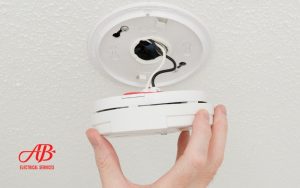

Why Every Second Counts in a Fire Emergency
Imagine being fast asleep when a fire starts in your home. You trust that your smoke detector will alert you in time—but what if the battery is dead? What if you forgot to replace it? Without a functioning smoke alarm, you and your loved ones could lose precious seconds that mean the difference between life and death.
At AB Electrical Services, we believe that fire safety should never be left to chance. Hardwired smoke detectors are the gold standard in fire protection, ensuring round-the-clock safety because they’re directly connected to your home’s electrical system. Even in a power outage, their built-in battery backup ensures they remain operational. When properly installed and maintained by our expert electricians, hardwired smoke alarms provide faster, more reliable alerts, giving you the time you need to escape safely.
Why Smoke Detectors Are Essential for Home & Business Safety
The Role of Early Fire Detection
Fires spread faster than most people realize, often turning deadly in under three minutes. A working smoke detector provides early warning, allowing you to escape before the situation becomes life-threatening.
Real Statistics on Fire Safety
- Three out of five home fire deaths occur in homes without working smoke alarms
- The risk of dying in a house fire is reduced by 55% when smoke alarms are installed and functioning properly
- Hardwired smoke detectors are more reliable than battery-operated ones because they eliminate the risk of dead or missing batteries
Common Fire Safety Mistakes Homeowners Make
- Relying solely on battery-operated smoke detectors without checking them regularly
- Not installing smoke detectors in all required areas (bedrooms, hallways, living spaces, etc.)
- Ignoring maintenance, such as testing alarms and replacing units every 10 years
How Hardwired Smoke Detectors Work
Direct Connection to Your Home’s Electrical System
Unlike battery-powered smoke detectors, hardwired alarms receive continuous power, ensuring they remain operational at all times.
Battery Backup for Power Outages
Even if the power goes out, a built-in battery backup keeps the detector functional, so you’re never unprotected.
Interconnected Alarms for Faster Alerts
In a fire emergency, every second counts. When one hardwired smoke detector sounds an alarm, all interconnected alarms throughout the home will activate simultaneously, giving everyone in the house immediate warning.
Hardwired vs. Battery-Powered Smoke Detectors: Which Is Safer?
Feature | Hardwired Smoke Detector | Battery-Powered Smoke Detector |
Power Source | Home’s electrical system with battery backup | Battery only (can be removed or die) |
Reliability | High—always powered | Risk of failure if battery dies |
Interconnectivity | Alarms activate together | Standalone—only the affected unit sounds |
Code Compliance | Required in most new homes | Allowed in some older homes, but less effective |
Long-Term Protection | Lasts up to 10 years with backup battery changes | Requires frequent battery changes |
When to Upgrade from Battery-Only to Hardwired Smoke Detectors
- If your home relies solely on battery-powered smoke alarms
- If you frequently forget to replace batteries
- If you want interconnected alarms for whole-home alerts
The Installation Process: What Homeowners Need to Know
Best Placement for Smoke Detectors
To ensure full coverage, install smoke detectors:
In every bedroom and sleeping area
Outside each bedroom (hallways, stairwells, etc.)
On every level of the home, including basements
At least 10 feet away from cooking appliances to prevent false alarms
Ensuring Code Compliance
Most fire safety codes require hardwired smoke detectors in new homes. A licensed electrician ensures proper installation, following National Fire Protection Association (NFPA) standards.
Integrating Smoke Detectors with Smart Home Systems
Modern hardwired smoke detectors can be integrated with smart home security systems, allowing you to:
- Receive mobile alerts in case of an emergency
- Monitor detector status remotely
- Automatically notify emergency responders when smoke is detected
Maintenance & Testing: Ensuring Long-Term Reliability
How Often Should You Test Your Smoke Detectors?
- Test monthly by pressing the “test” button to ensure proper function
- Replace the backup battery once a year to prevent power failures
- Replace the entire unit every 10 years, as sensors degrade over time
Signs Your Smoke Detector Needs Repair or Replacement
Frequent false alarms or failure to sound
Chirping even after replacing the battery
Yellowing or outdated unit (older than 10 years)
Why Professional Inspections Matter
Hiring one of our licensed electricians from AB Electrical Services to inspect and maintain smoke detectors ensures:
Wiring integrity and proper voltage supply
Full compliance with fire safety codes
Correct placement for maximum effectiveness
Upgrade to Hardwired Smoke Detectors for Maximum Protection
A hardwired smoke detector system is one of the best investments you can make in home safety. With constant power, interconnected alarms, and battery backup, it provides round-the-clock protection for your family.
Don’t wait for an emergency to find out your smoke detectors aren’t working. Schedule an inspection or upgrade to hardwired smoke detectors today with AB Electrical Services!
Frequently Asked Questions
1. Are hardwired smoke detectors better than battery-operated ones?
Yes, hardwired smoke detectors are generally considered more reliable than battery-operated models. They are connected directly to your home’s electrical system, providing a continuous power supply, and typically include a battery backup for power outages. This setup ensures that the detectors remain functional even during electrical failures. Additionally, hardwired detectors can be interconnected, so when one alarm is triggered, all alarms in the system sound simultaneously, offering enhanced safety.
2. Do hardwired smoke detectors need to be replaced?
Yes, like all smoke detectors, hardwired models have a limited lifespan and should be replaced every 10 years. Over time, the sensors can become less sensitive, reducing their effectiveness in detecting smoke. Regular maintenance, including testing the alarms monthly and replacing backup batteries annually, is also essential to ensure optimal performance.
3. Can I install hardwired smoke detectors myself?
Installing hardwired smoke detectors involves working with your home’s electrical system, which can be complex and potentially hazardous if you’re not experienced. It’s recommended to hire a licensed electrician for installation to ensure the detectors are correctly connected and comply with local building codes. Professional installation ensures that the system is set up safely and functions as intended.
Request a Quote
Fill out the form below and a member of our team will reach out to you as soon as possible