
Ceiling Fan Wiring & Electrical Requirements: Safety & Code Compliance
Learn More About Our Ceiling Fan Services
Related Articles
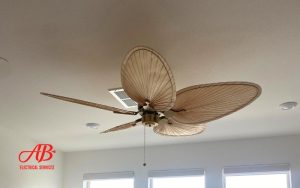


Ensure Safe, Code-Compliant Ceiling Fan Installation
You’ve picked out the perfect ceiling fan to enhance your home’s comfort and efficiency. You’re ready to enjoy better air circulation, lower energy bills, and an upgraded look. But before installation begins, one crucial question remains—is your home’s electrical system ready?
Improper ceiling fan wiring isn’t just an inconvenience—it’s a serious safety hazard. Overloaded circuits, unstable mounts, and faulty wiring can lead to fires, electric shocks, and costly damage. That’s why professional electricians follow strict safety standards to ensure every installation is secure and built to last.
At AB Electrical Services, we specialize in safe and code-compliant ceiling fan installations. This guide will cover electrical requirements, wiring best practices, and code compliance, helping you avoid common mistakes and ensuring a long-lasting, hazard-free installation.
Why Electrical Safety is Critical for Ceiling Fan Installation
The Risks of Improper Ceiling Fan Wiring
A poorly wired ceiling fan can lead to:
- Fire hazards from overheating wires or overloaded circuits
- Electric shock risks from faulty grounding or exposed wires
- Structural damage if the fan is mounted on an unstable electrical box
- Performance issues such as flickering lights, inconsistent speeds, or motor failure
Why Ceiling Fans Require a Dedicated Fan-Rated Electrical Box
Standard light fixture boxes are not designed to support a ceiling fan’s weight and movement. A fan-rated electrical box is reinforced to hold at least 35–50 pounds, preventing detachment over time. If your current electrical box isn’t fan-rated, it must be replaced before installation.
DIY Installation vs. Hiring a Licensed Electrician
Factor | DIY Installation | Professional Installation |
Safety | Higher risk of improper wiring, shocks, or fire hazards | Ensures proper grounding, wiring, and mounting |
Code Compliance | May not meet NEC or local code requirements | Fully compliant with electrical regulations |
Structural Integrity | Risk of unstable or misaligned installation | Securely mounted, balanced, and wired correctly |
Time & Effort | Can take hours or even days | Done efficiently in under two hours |
Understanding Ceiling Fan Electrical Requirements
Checking Existing Wiring: Is Your Circuit Rated for a Ceiling Fan?
Ceiling fans typically require a standard 120-volt circuit. The wiring must be capable of handling the fan’s power draw, usually between 0.5 to 1 amp. If installing multiple ceiling fans, a new dedicated circuit may be needed to prevent overloading.
Hardwired vs. Plug-In Ceiling Fans: Which One is Right for Your Home?
- Hardwired ceiling fans connect directly to your home’s electrical system, offering a cleaner look and greater reliability.
- Plug-in ceiling fans are less common and typically used in temporary or rental spaces where permanent installation isn’t an option.
When to Install a New Circuit or Upgrade Existing Wiring
If your home has outdated wiring or doesn’t meet code, a new circuit may be required. This is especially necessary when adding a ceiling fan to an existing circuit that’s already near capacity. Homes with knob-and-tube wiring or aluminum wiring may also need electrical upgrades before installation.
Wiring a Ceiling Fan to Code Compliance
National Electrical Code (NEC) Requirements for Ceiling Fan Wiring
- Ceiling fans must be installed on a dedicated fan-rated electrical box per NEC Section 314.27(B).
- Proper grounding is required to prevent electrical shocks.
- Wires must be connected using approved wire nuts or connectors.
- GFCI (Ground Fault Circuit Interrupter) protection is required in damp or wet locations.
GFCI and AFCI Protection: What Homeowners Need to Know
- GFCI outlets or breakers protect against shock hazards in bathrooms, kitchens, and outdoor spaces.
- AFCI (Arc Fault Circuit Interrupter) protection prevents electrical fires caused by faulty wiring in living rooms and bedrooms.
State and Local Permit Requirements for Ceiling Fan Installation
- Some cities require a permit for new electrical installations.
- Professional electricians ensure all work meets local code requirements and passes necessary inspections.
Step-by-Step Guide to Safely Wiring a Ceiling Fan
Step 1: Turn Off Power and Test for Voltage
Shut off the circuit breaker before beginning any work. Use a voltage tester to confirm the power is off before handling any wiring.
Step 2: Identify the Existing Wiring Configuration
Most ceiling fans have four main wires:
- Black (hot): Powers the fan motor
- Blue (optional, hot): Controls the light kit
- White (neutral): Completes the circuit
- Green or bare copper (ground): Prevents electrical shocks
Step 3: Securely Connect Wires
Black wires should be connected together for the fan motor, while white wires connect for the neutral line. The ground wire must be attached to both the fan bracket and the electrical box. If a light kit is included, the blue wire should be connected to the corresponding power source or switch wire.
Step 4: Use Proper Wire Connectors and Secure All Connections
Twist wires together securely and cap them with wire nuts. For extra protection, wrap connections in electrical tape to prevent accidental loosening.
Step 5: Mount the Fan and Test Electrical Functionality
Attach the fan motor securely to the mounting bracket. Install blades and check for balance. Restore power and test the fan at all speed settings to ensure smooth operation.
Common Ceiling Fan Wiring Issues & How to Fix Them
Fan Not Turning On? Checking Circuit Breakers and Wire Connections
- Check if the circuit breaker has tripped.
- Confirm all wire connections are secure.
Lights Work, but the Fan Doesn’t? How to Troubleshoot Wiring Mistakes
- Verify the black wire is properly connected to the fan motor.
- Ensure the wall switch is set correctly.
Wiring a Fan with a Remote vs. Wall Switch: Understanding the Difference
- Wall switch installation requires separate power wires for fan and light controls.
- Remote-controlled fans use an integrated receiver inside the fan canopy for wireless operation.
Dealing with Old Wiring in Older Homes: What Homeowners Should Watch Out For
- Older homes often have non-grounded wiring, which must be updated to meet modern safety standards.
- Two-wire systems require additional wiring for full fan and light operation.
Hire a Professional for Safe Ceiling Fan Wiring
Ceiling fan installation involves more than just mounting a fixture—it requires safe and code-compliant electrical wiring. At AB Electrical Services, our licensed electricians ensure your fan is properly wired, safely installed, and up to code.
Need a ceiling fan installed? Contact AB Electrical Services for expert wiring and professional installation!
Frequently Asked Questions
1. What type of electrical box is required for ceiling fan installation?
For ceiling fan installations, it’s essential to use a fan-rated electrical box. These boxes are specifically designed to support the weight and dynamic movement of a ceiling fan, ensuring safety and stability. Standard electrical boxes used for light fixtures are not suitable, as they may not withstand the fan’s motion, potentially leading to hazards. Always ensure the box is securely attached to a structural support, such as a ceiling joist.
2. Do ceiling fans need to be grounded?
Yes, grounding a ceiling fan is crucial for safety. Proper grounding helps prevent electrical shocks by providing a path for electrical faults. The green or bare copper wire from the fan should be connected to the home’s grounding system, typically to a ground wire in the ceiling or the metal electrical box. Ensuring correct grounding is vital for both safety and code compliance.
3. Are permits required for installing a ceiling fan?
Permit requirements for ceiling fan installations vary by locality. In many areas, replacing an existing light fixture with a ceiling fan doesn’t require a permit, provided the existing wiring can support the fan. However, if new wiring or structural modifications are necessary, or if local building codes mandate it, obtaining a permit may be required. It’s advisable to consult local building authorities or a licensed electrician to ensure compliance with all regulations.




Request a Quote
Fill out the form below and a member of our team will reach out to you as soon as possible